RegionAzoresLocal picks63Coordinates37.74° N · 25.68° WCome hungry. Leave with stories.
A sense of place, in words
«A geografia, para nós, vale outro tanto como a história.»
Vitorino Nemésio · Açorianidade
Nemésio links Azorean identity to the islands' geography and history.
THE ARCHIPELAGO AT THE TABLE
Taste the archipelago
What to taste across Azores?
Specialities associated with the archipelago's places and local traditions.
🍽️
At the table
Savoury dishes associated with places across this archipelago.
Vegetarian01
🍽️
Tortas de Erva do Calhau
Traditional savoury fritters prepared with a wild coastal plant gathered on Corvo.Guide entry
Vegetarian02
🍽️
Queijo do Corvo
A traditional cow’s milk cheese from Corvo Island, reflecting the island’s small-scale dairy farming tradition.Guide entry
Soups03
🍽️
Couves da Barça
A traditional dish from Corvo Island made with cabbage and pork, characteristic of the island’s rustic home cooking.Guide entry
Fish04
🍽️
Caldeirada de Congro
A traditional fish stew from Flores Island prepared with conger eel, potatoes and aromatic seasonings.Guide entry
Fish06
🍽️
Caldeirada de Peixe à Açoreana
Azorean fish stew with fresh Atlantic fish, potatoes, onion and aromatic seasonings, with variations between islands.Guide entry
Seafood07
🍽️
Polvo à moda do Faial
Tender octopus slowly stewed with wine, onion and aromatic island seasonings.Guide entry
Meat08
🍽️
Molha de Carne
A traditional Azorean meat dish from the islands of Faial and Pico, slowly cooked in a richly seasoned sauce and commonly served with bread.Guide entry
Vegetarian11
🍽️
Bolo de Sertã das Flores
Traditional flat breads from Flores Island, cooked on a hot griddle known locally as a sertã.Guide entry
Fish12
🍽️
Peixe com Molho de Vilão
A traditional Azorean fish dish served with a tangy sauce of vinegar, garlic and regional red pepper paste.Guide entry
Fish14
🍽️
Peixe Assado na Folha da Figueira
A traditional Graciosa dish in which fresh fish is wrapped in fig leaves and roasted, giving it a distinctive aroma.Guide entry
Meat15
🍽️
Linguiça com Inhame
A traditional Graciosa dish combining seasoned Azorean pork sausage with boiled taro.Guide entry
Meat16
🍽️
Molha de Carne
A traditional Azorean meat stew, particularly associated with Pico and Faial, slowly cooked in a richly seasoned sauce.Guide entry
Meat17
🍽️
Molho de Fígado
A traditional Graciosa dish of pork liver cooked in a richly seasoned sauce.Guide entry
A traditional Azorean meat dish from the islands of Faial and Pico, slowly cooked in a richly seasoned sauce and commonly served with bread.Guide entry
Soups24
🍽️
Caldo de Nabos
A hearty traditional soup made with turnips, pork and local vegetables.Guide entry
Soups25
🍽️
Sopa do Império
A festive bread-based soup traditionally served during the Holy Spirit celebrations.Guide entry
Meat26
🍽️
Caçoila
Slow-cooked marinated meat, traditionally prepared with aromatic spices and wine.Guide entry
Fresh clams from São Jorge Island, prized for their delicate flavour and close connection to the island’s coastal cuisine.Guide entry
Soups35
🍽️
Sopa de Funcho
A traditional São Miguel soup flavoured with aromatic fennel, a herb long used in Azorean cuisine.Guide entry
Seafood36
🍽️
Polvo Guisado
Slow-cooked octopus, often prepared with wine and spices.Guide entry
Meat37
🍽️
Morcela com Ananás dos Açores
A classic São Miguel combination of fried blood sausage with sweet and slightly acidic Azorean pineapple.Guide entry
Meat38
🍽️
Cozido das Furnas
São Miguel’s great gastronomic symbol: meats, cured sausages and vegetables slowly cooked using the geothermal heat of Furnas.Guide entry
Meat39
🍽️
Bife à Regional de São Miguel
An iconic São Miguel beef steak served in a rich, aromatic sauce, traditionally topped with a fried egg.Guide entry
Meat40
🍽️
Favas à Moda de São Miguel
A traditional São Miguel dish of broad beans slowly cooked with pork and regional sausages.Guide entry
Meat41
🍽️
Torresmos de Molho de Fígado
A traditional São Miguel pork dish with pieces of pork cooked in a rich, intensely flavoured liver sauce.Guide entry
Vegetarian48
🍽️
Queijo Vaquinha
Cow’s-milk cheese produced on Terceira and rooted in the island’s dairy tradition.Guide entry
Soups49
🍽️
Sopas do Espírito Santo
Bread soaked in meat broth, traditionally served during Holy Spirit festivities across Terceira.Guide entry
Soups50
🍽️
Sopa de Funcho
A comforting traditional soup scented with the fresh, distinctive aroma of fennel.Guide entry
Seafood51
🍽️
Polvo Guisado
Octopus slowly stewed until tender in an aromatic, richly seasoned sauce.Guide entry
Meat52
🍽️
Alheira e Linguiça
Smoked sausages with a strong presence on Azorean tables and in Terceira’s regional cooking.Guide entry
Meat53
🍽️
Alcatra da Terceira
Beef slowly cooked in a traditional earthenware pot with wine and aromatic spices.Guide entry
🍰
Local sweets
Pastries and traditional sweets worth making room for.
Sweets05
🍰
Torradas
A traditional sweet from Corvo Island, made from slices of bread enriched with eggs and sugar.Guide entry
Sweets09
🍰
Fofas do Faial
Faial’s signature pastry: light, elongated choux-like cakes traditionally filled with a sweet aromatic cream.Guide entry
Sweets13
🍰
Flóricas
Traditional sweets from Flores Island, prepared from a simple dough and shaped into characteristic flower-like forms.Guide entry
Sweets18
🍰
Queijadas da Graciosa
The island’s signature sweet: small star-shaped pastries with a delicate shell and a rich milk-and-egg filling.Guide entry
Sweets19
🍰
Massa Sovada
Soft, lightly sweet Azorean bread traditionally prepared for celebrations and religious festivities.Guide entry
Sweets22
🍰
Rosquilhas do Pico
Traditional ring-shaped sweet breads from Pico Island, with a soft texture and delicate aroma.Guide entry
Sweets27
🍰
Biscoitos de Orelha
Crisp traditional biscuits from Santa Maria, easily recognised by their characteristic twisted shape.Guide entry
Sweets28
🍰
Melindres
Small traditional biscuits with a light texture and a sweet glazed finish.Guide entry
Sweets32
🍰
Espécies de São Jorge
Small pastries with delicate dough and an aromatic spiced filling, especially associated with Ribeira Seca.Guide entry
Sweets33
🍰
Rosquilhas
Traditional ring-shaped pastries associated with festivities and religious celebrations.Guide entry
Sweets42
🍰
Ananás dos Açores
Traditionally grown in greenhouses on the island and one of São Miguel’s most emblematic products.Guide entry
Sweets43
🍰
Queijadas da Vila Franca do Campo
Small traditional queijadas from Vila Franca do Campo, strongly associated with the island.Guide entry
Sweets44
🍰
Bolo Lêvedo
A soft, lightly sweet bread-cake typical of Furnas.Guide entry
Sweets54
🍰
Donas Amélias
Spiced Terceira cakes named in honour of Queen Amélia after the royal visit of 1901.Guide entry
Sweets55
🍰
Massa Sovada
A soft, enriched Azorean sweet bread served at religious festivities and alongside Terceira Alcatra.Guide entry
Sweets56
🍰
Cornucópias
Crisp horn-shaped pastries filled with a smooth, sweet egg cream.Guide entry
Sweets57
🍰
Alfenim
Moulded sugar figures deeply connected to Azorean religious festivities and Terceira tradition.Guide entry
Sweets58
🍰
Arroz-doce
Creamy rice pudding traditionally served at festivities, though not exclusive to Terceira.Guide entry
Sweets59
🍰
Filhós
Festive fried dough found on Terceira and in many other Portuguese regions.Guide entry
Sweets60
🍰
Papos de Anjo da Terceira
A traditional Terceira Island sweet made with eggs and sugar, with a delicate texture and rich syrup.Guide entry
🍷
In the glass
The local drink that completes the experience.
Drinks10
🍷
Vinho do Faial
Small-production island wines shaped by volcanic soils and Faial’s Atlantic climate.Guide entry
Drinks23
🍷
Vinho do Pico
A distinctive Azorean wine produced on Pico Island, where vines grow in volcanic soils protected by traditional black-stone walls.Guide entry
Drinks29
🍷
Vinho de Santa Maria
Island wine produced in Santa Maria’s distinctive vineyards, particularly around São Lourenço.Guide entry
Drinks34
🍷
Vinho de Cheiro de São Jorge
A traditional aromatic wine from São Jorge Island, historically produced from American grape varieties.Guide entry
Drinks45
🍷
Chá da Gorreana
Tea grown and produced at the historic Gorreana plantation on São Miguel Island, known for its black and green varieties.Guide entry
Drinks46
🍷
Licor de Maracujá
A passion-fruit liqueur strongly associated with the Azores.Guide entry
Drinks47
🍷
Licor de Ananás
A regional drink connected to pineapple cultivation on São Miguel.Guide entry
Drinks61
🍷
Vinho Verdelho dos Biscoitos
A distinctive wine from Biscoitos on Terceira Island, traditionally produced from Verdelho grapes grown in volcanic soils.Guide entry
Drinks62
🍷
Cerveja Brianda
A craft beer from Terceira Island, produced locally in the Azores.Guide entry
Drinks63
🍷
Licor de Nêveda
A traditional aromatic liqueur made by infusing pennyroyal-like wild mint known locally as nêveda in alcohol with sugar.Guide entry
ACROSS THE ISLANDS
Islands to discover
The islands of the Azores
Each island has its own landscapes, stories and flavours.
Island
Corvo
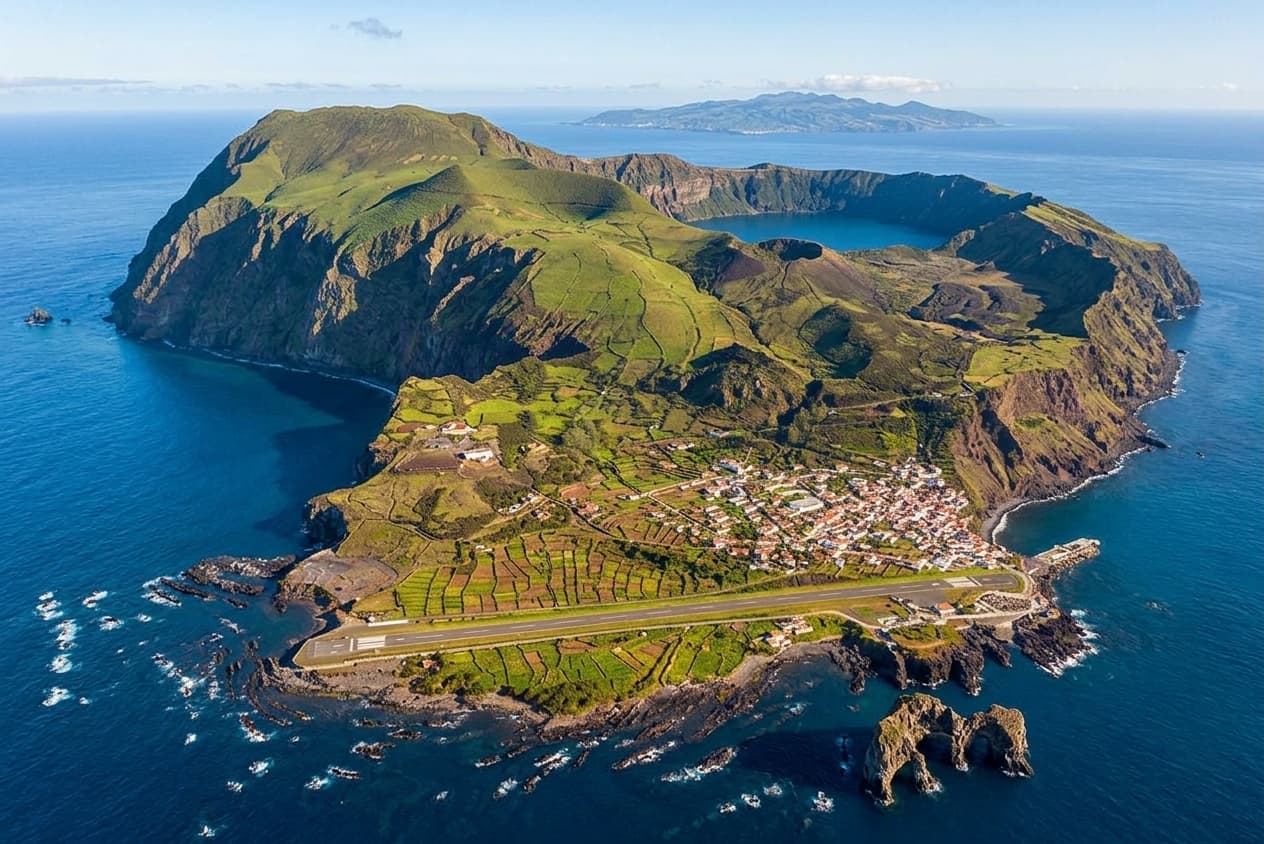
Portugal’s smallest island has a simple and deeply local cuisine shaped by cattle farming, the Atlantic and generations of isolated island life.
Island
Faial
Known as the Blue Island, Faial combines a strong maritime identity with Azorean rural traditions, bringing fresh Atlantic fish, seafood, meat dishes and traditional sweets to the table.
Island
Flores
Waterfalls, green valleys and an Atlantic pantry define Flores, where hearty rural cooking meets fresh fish, local cheese and the island’s abundant watercress and taro.
Island
Graciosa
Known as the White Island, Graciosa has a rural cuisine shaped by fertile volcanic soils, livestock, vineyards and the Atlantic, with its famous queijadas standing out among the island’s specialties.
Island
Pico
Black-basalt vineyards, Atlantic cooking and Portugal’s highest mountain give Pico a table shaped by volcanic land and sea.
Island
Santa Maria
Known as the Sunshine Island, Santa Maria combines fertile land, Atlantic fish and distinctive traditional recipes, including dishes found nowhere else in the Azores.
Island
São Jorge
Between high cliffs and fertile fajãs, São Jorge brings together its celebrated cheese, Atlantic seafood and festive island baking.
Island
São Miguel
Volcanic heat, Atlantic fish, island fruit and tea plantations shape the table of São Miguel.
Island
Terceira
A volcanic island where slow cooking, earthenware pots and generous seasoning shape one of the Azores’ most distinctive tables.
BEYOND THE TABLE
Living traditions
Festivals & traditions
Celebrations, pilgrimages and historical gatherings that reveal another side of local identity.
✦
Horta · first week of August
Sea Week
When: August
✦
Parishes across Faial · Pentecost season
Holy Spirit Festivities
When: May to September
✦
Horta · religious and maritime tradition
Nautical Procession of Our Lady of Guia
When: August
✦
Caldeira · popular and religious celebration
São João Baptista Festivities
When: 23 and 24 June
✦
Parishes across Flores · Pentecost season
Holy Spirit Festivities
When: May to September
✦
Fajãzinha · late August
Feast of Our Lady of Remedies
When: late August
✦
Graciosa · religious celebration
Procession of Our Lady of Guadalupe
When: June to September
✦
Graciosa · celebrations across the island
Holy Spirit Festivities
When: May to September
✦
Santa Cruz da Graciosa · island festivities
Feast of Senhor Santo Cristo dos Milagres
When: June to September
✦
Madalena and São Roque do Pico · living wine landscape
Pico Island Vineyard Culture
When: throughout the year
✦
Lajes do Pico · late August
Semana dos Baleeiros
When: late August
✦
Praia Formosa · August
Maré de Agosto
When: August
✦
Parishes across Santa Maria · Pentecost season
Holy Spirit Festivities
When: May to September
✦
Vila do Porto · island and religious celebration
Feast of Our Lady of the Assumption
When: around 15 August
✦
Praia Formosa · music and cultural festival
Maré de Agosto Festival
When: August
✦
Velas · first week of July
Semana Cultural das Velas
When: first week of July
✦
Velas · 23 April
Festas de São Jorge
When: 23 April
✦
Across the island · May to September
Festas do Divino Espírito Santo
When: May to September
✦
Rosais · 15 August
Festa de Nossa Senhora do Rosário
When: 15 August
✦
Calheta · second week of July
Festival de Julho
When: second week of July
✦
Several places on São Jorge
Touradas à Corda at Popular Festivities
When: between May and October
✦
Parishes across the island
Pilgrimages and Parish Patron Festivities
When: June to September
✦
Ponta Delgada · major religious celebration
Festivities of Senhor Santo Cristo dos Milagres
When: June to September
✦
Ribeira Grande · traditional Saint Peter parade
Cavalhadas de São Pedro
When: 28 and 29 June
✦
São Miguel · celebrations across the island
Holy Spirit Festivities
When: May to September
✦
Angra do Heroísmo · Saint John festivities
Sanjoaninas
When: 23 and 24 June
✦
Praia da Vitória · cultural and popular festivities
Praia Festivities
When: August
✦
Terceira · traditional street bull events
Touradas à Corda
When: between May and October
✦
Terceira · celebrations around the impérios
Holy Spirit Festivities
When: May to September
WALK THE LANDSCAPE
Notable routes
Trails worth following
A short selection of established trails. Check the official route conditions before setting out.
Flying is usually the most regular way to travel between island groups, while ferries are useful on nearby routes. On each island, renting a car is often the most practical way to explore rural areas, trails and viewpoints with flexibility.